

 |
| We can see the village far below |

The air changes; it's a bit cooler than the valley although the bus interior seems to have brought along some of the heat from down below. A bright sun and the sound of cow bells greets us as we arrive at the summer pastures, wood-framed buildings and barn that marks our destination. The view is everything one would imagine. Across the valley, the other mountainsides are dotted with small buildings and pastures rising up to some snow capped peaks. There is even a glacier in the distance.

Our hosts for the tour today are a rosy-cheeked young woman whose boyfriend is the chief cheese maker, along with his mother, her sister and her sister's boyfriend who all tend the cows from early spring until early fall. When winter comes, and the upper pastures are snow covered, she is the receptionist at a ski school, and he is a ski instructor.


In the old days, the cows were herded up and down the mountainside, but modern times and machinery have changed all that. Cows are now given a lift by truck to save time and precious energy; they're here to graze on herb pastures and produce milk for some of the best cheese in Switzerland. Each of the decorated cow bells hanging from the rafters represents a prize winning cow.

Our guide explains that 9 to 12 hour days are the norm during their stay here, bringing cows in; milking; letting them out; making cheese; feeding the swine (who eat the whey produced - nothing goes to waste here); and conducting the occasional tour. They also rent out the building for weddings.
 |
| The cows have their tails tied to keep them out of the way when milking |


It's a combination of both modern and primitive with well-worn timbers and spotlessly clean machinery coming together to produce stacks of cheese rounds aging on wooden racks in cool rooms. Part of the daily ritual includes the turning of the wheels of cheese as they age and marking their progress.


Mountain air gives you an appetite. Lunch today, made by the alpenage hands starts with fresh salad, a local wine and a local soft drink that tastes a little like ginger ale, potatoes and a delicious cheese known as "Raclette."

The cheese is melted from large blocks under special heaters and scraped off onto your plate just before becoming burnt. It has a unique taste stemming from the pasture with its herbs that the cows eat.

 |
| Special warming units for preparing raclette. |
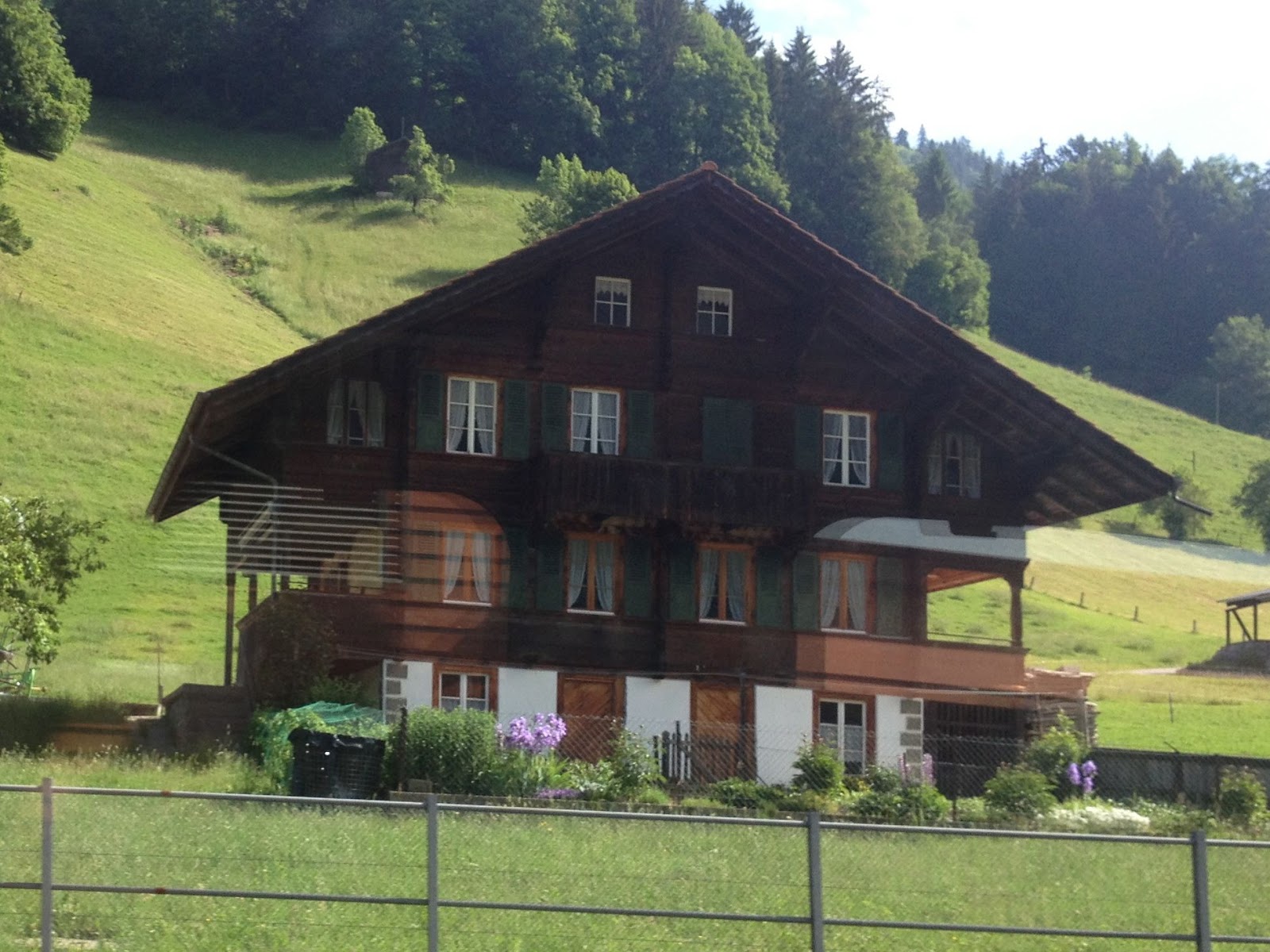
After lunch and a few more pictures, it's back down the mountainside to catch the next train to Montreux. We're winding our way across one of the passes and enjoying the view as we leave the German-speaking part of Switzerland headed for the "Swiss Riviera." French is spoken here and gray stone houses slowly replace the half-timbered woody German-style chalets. The mountains are jagged and are called dents, the French word for teeth.
Breathtaking views include deep gorges and valleys prompting one in our group to ask "how far down is it?" The reply from Andrea is swift and to the point: "In Switzerland we say it is two meters down and then Eternity."

At last, the hillside gives way to breaks in the trees for brief glimpses of the Western end of Lake Geneva and the town of Montreux. Palm trees at the station where we change trains let us know that the weather is influenced by the Mediterranean. We also arrived in the middle of a heat wave and discovered the temperatures in the 90s!
 |
| We didn't expect palm trees in Switzerland! |
This is the only station in Europe with three different rail gauges; regular, narrow for crossing the mountains and very skinny (the Rochers de Naye train) taking visitors to a nearby peak. We're on our way to our final destination for the day, Brig.
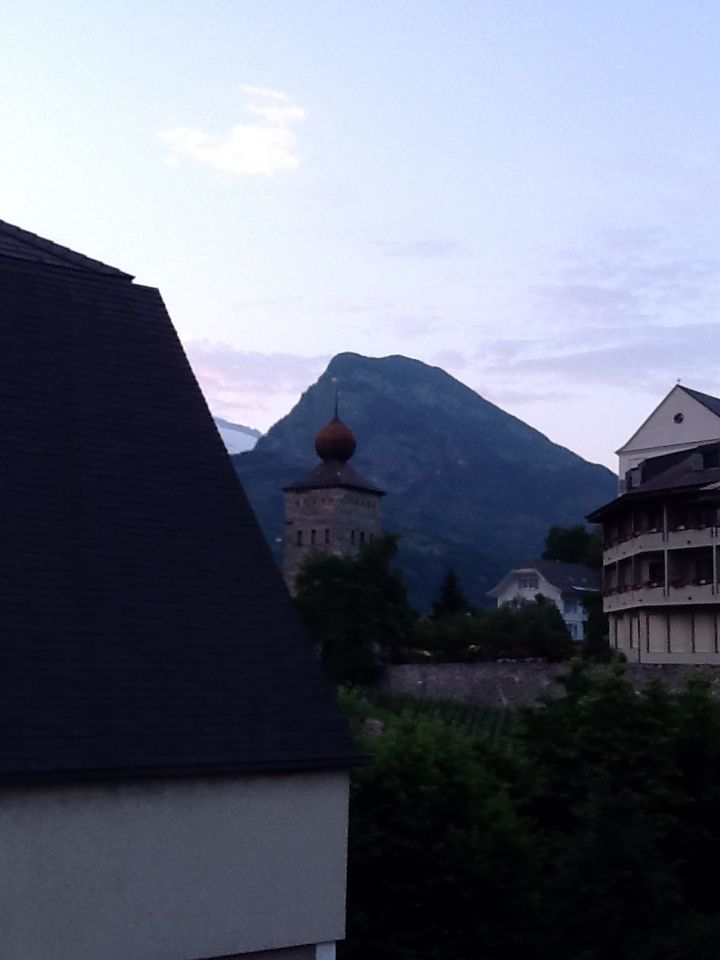
On arrival in the early evening, a wide avenue greets us outside the station where the duck leads us on the usual "short walk, 10 minutes, slightly uphill" through the heart of the city to our hotel. Rooms at the Schlosshotel, Art Furrer, either overlook the small park outside or the snow capped mountain that stand between us and the top of Italy.
An evening meal with salads, a delicious carrot soup and a choice of entree topped of with glasses of Coca-cola with real ice and good conversation rounds out our day before bedtime.

After a very full day, the duck is dog tired.
Maybe you will have enough energy to watch this short video about Swiss "cow culture."


