Saturday, September 21, 2013

Archeology Touring

We're touring the old city of Locarno at the top of Lago Maggiore briefly this morning on foot. Locarno, famous for the treaty that let Germany join the League of Nations in 1925, is filled with clusters of shops, churches and plazas replete with market stalls selling everything from flowers to food to "box lots" of goods. It was hard to pull Peggy away from vendors just setting up and unpacking treasures to be had.


The Duck, however, had other ideas and we boarded the Postal Bus for the Verzasca Valley leading high into the surrounding mountain and our destination for the day - Sonogno. Population 85, Sonogno is a relatively short distance, but is a world away.


Fed by glaciers, the water is clear and cold
Leaving behind city streets, we began our journey up the valley road which was just wide enough for two small cars to pass if they met going in opposite directions. Coupled with switchbacks, hairpin turns and hundred year old buildings right up against the road, our twenty foot bus somehow managed to negotiate the fifteen foot hairpin turns and even survived passing an oncoming car towing a travel trailer. It is believed that sucking in our collective breaths made the bus narrow enough to squeeze past on the lane-and-a-half road.


The Postal Bus lines travel to the most remote parts of Switzerland

Passing the wild hay making slopes of Vogorno, the Postal Bus followed the Efra mountain stream from the lower dam past a number of small villages clinging to the hillsides. 
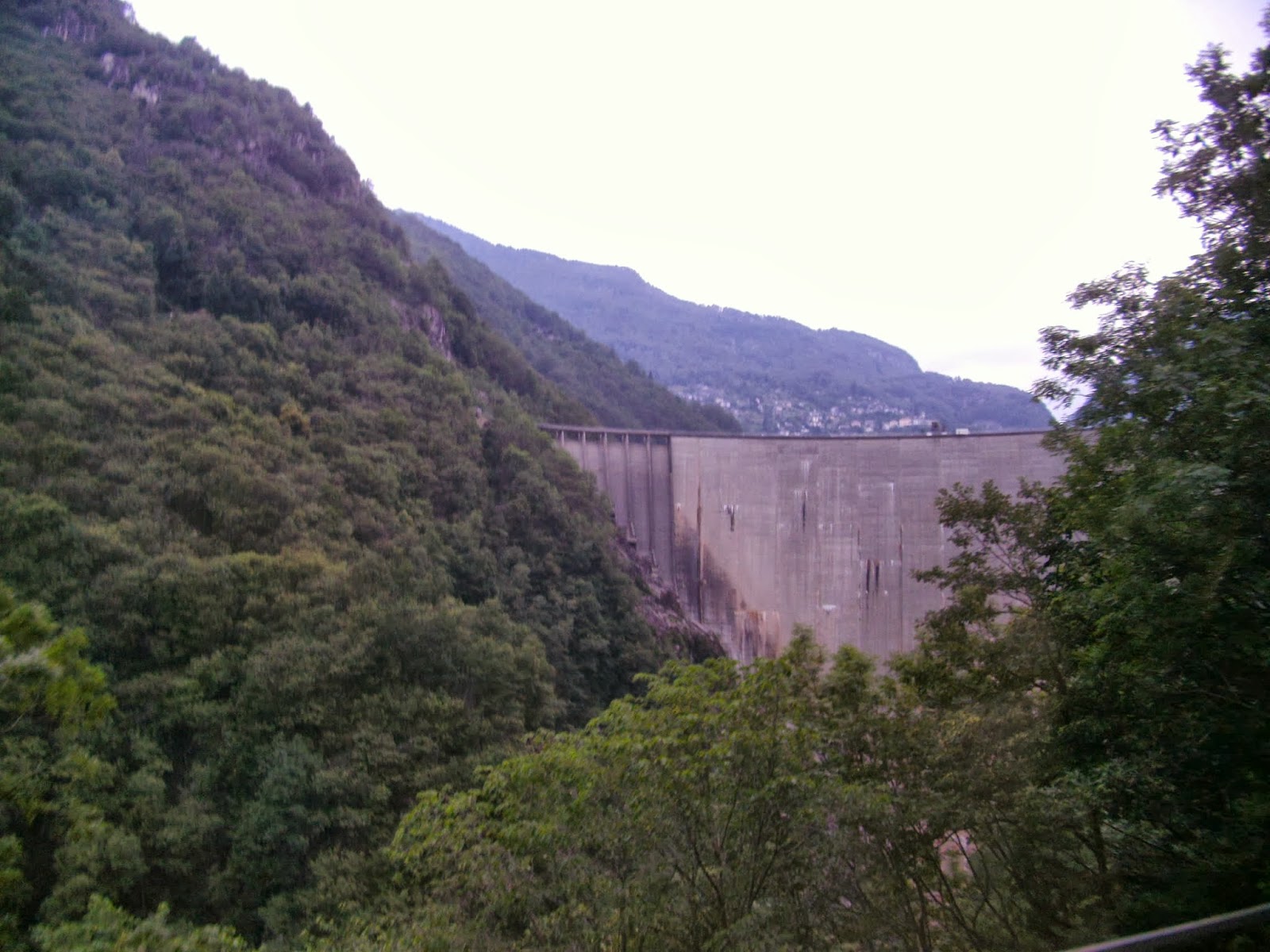


There was Brione Verzasca, dependent on livestock farming and famous for wolf traps used to control the wild predators; Frasco, with its water mill and power plant; Vogorno, Odro with its Alpine pastures; Lavertezzo's monolithic basins for collecting water to make up for the lack of surface and ground waters along the Fopia slopes; and the oldest town in the valley with a population of only 16 and accessible via a cable across the deep ravine carved out by the stream below.


And along the way, a charming double arch stone bridge near Ponte dei Salti where it's said lovers demonstrate their courage by jumping into the icy waters below.


Sonogno is a step back in time. In addition, it is as far as the bus goes, and in Switzerland where the busses and trains go everywhere, that's saying a lot.  Here, signposts to destinations beyond are given in hours and minutes instead of kilometers. Here, the most ancient form of transportation is used as vehicles are not permitted in most of the town.


Walkers Only--No Cars!


The buildings are almost completely made of stone, including the "shingles" that form the roofs, the stairs, and the decoration.


A fountain in the square provides ice cold drinking water should you have a structure without modern plumbing. 


The 18th century buildings center around a magnificent church and the Casa Genardini, home of the local museum.


The museum tells the heart wrenching story of the children of the valley so poor they were sent away to become chimney sweeps in order to bring some small income back to their villages.


We enjoyed a delicious lunch at Ristorante Alpino and had ample time to visit several shops offering hand made items for sale knitted or woven or carved throughout the winter months. 


We wandered the narrow streets and marveled at Sonogno's peaceful beauty, almost as if we had stepped into Brigadoon.


This little fellow came out to sit in the sunshine

Sonogno is home to a number of artists and craftspersons


Behind us stood snow covered peaks as a reminder that this area is akin to "The Road Less Traveled" during the better part of the year. 


The last bus of the day arrived, and we boarded for our trip back down the valley. Rushing waters, deep gorges, lush vegetation and a myriad of small waterfalls provide ample subject matter for clicking cameras. On the last hairpin turn, a momentary stop gave a breathtaking view of Locarno and Lago Maggiore stretched out before us.


This short video shows Sonogno and the nearby waterfall at Froda:


From the city transportation center, a "short walk, slightly uphill" led us to dinner and a free evening where we bid goodbye to a member of our tour guide staff off on a personal errand. Pictures and warm hugs prevailed as only several days remained on this magnificent journey, FOLLOWING THE DUCK.


Friday, September 20, 2013

Mama Mia!

Everyone is gathered around luggage in the foyer of the hotel. Today, the duck is leading us across the top of the boot of Italy and there is no time to carry baggage with us, save for backpacks and personal items. After considering the physics of cramming all our bags into one van, our luggage is being transported by vehicle across the land route to our destination: Locarno, the Italian part of Switzerland. As was often the case when it came time for "luggage loading," David was front in center to help with the organizing!


David considers which bag should go in next

The journey from Brig takes us through the Simplon Pass tunnel (quite long and steep) to Domodossola, Italy. It's raining off and on which seems to fit the countryside. Gone are the bright colors of tidy houses, castles and streets, replaced with green vines, chipped ceramic tiles, and heavy vegetation.

Descending stairs to the tunnel for the connecting Centovalli train to Locarno, a cold wind greets us along with two cog train cars with seating arranged as if the design came after a motor and wheels were laid down first - almost an afterthought. Some seats were low; some high on a platform; and then low again further into the car. Even the horn, when sounded, didn't seem to have the deep, bass-throated tone of Swiss engines.


Santa Maria Maggiore is in the heart of the Italian portion of today's journey


Centovalli means "Hundred Valleys," and although we had seen so much gorgeous scenery already, the lush valleys with their steep drop offs and the rail bridges that helped us navigate these valleys still took our breath away.


We also noticed that in populated areas, every square meter of land was cultivated, often with neat rows of grapes. The Centovalli is the breadbasket of this part of Switzerland, and there were crops growing in even the smallest, steepest fields.


Image from myswitzerland.com

Climbing through the valley towards Locarno,  the landscape seemed somehow misplaced. Tight curves and steep drop-offs were the order of the day. At the top of the valley was the divide between countries. Here we exchanged our Italian crew for a Swiss one. The overcast skies brightened and even the trees seemed to sing out "alles in ordnung" as we descended into Switzerland once again. As David noted to everyone's amusement, even nature was a little more orderly once we left Italy.


With its lush palm trees and flowers, it seemed far from what we thought Switzerland would be.

At noon, after a "brief 10 minute walk, slightly uphill" and including a stop under a church portico because of a rain shower, we arrived at the Hotel Camelia. Here, pale yellow stucco walls, gardens with roses and pergolas with flowering vines, rooms with balconies and potted plants gave off an air of relaxation and welcome. Checking in and lunch in a bright, airy dining room gave way to free time to explore the sights and shopping in Locarno.


Our first rain!


By now, the walk down to the heart of town and the subsequent return back uphill seemed commonplace, as if we were Swiss ourselves and this was the normal progression of things. So too, was the interaction with shopkeepers; a combination of German, Italian, French and sign-language once again resulted in both happy customers and happy salespersons. 


Downtown Locarno

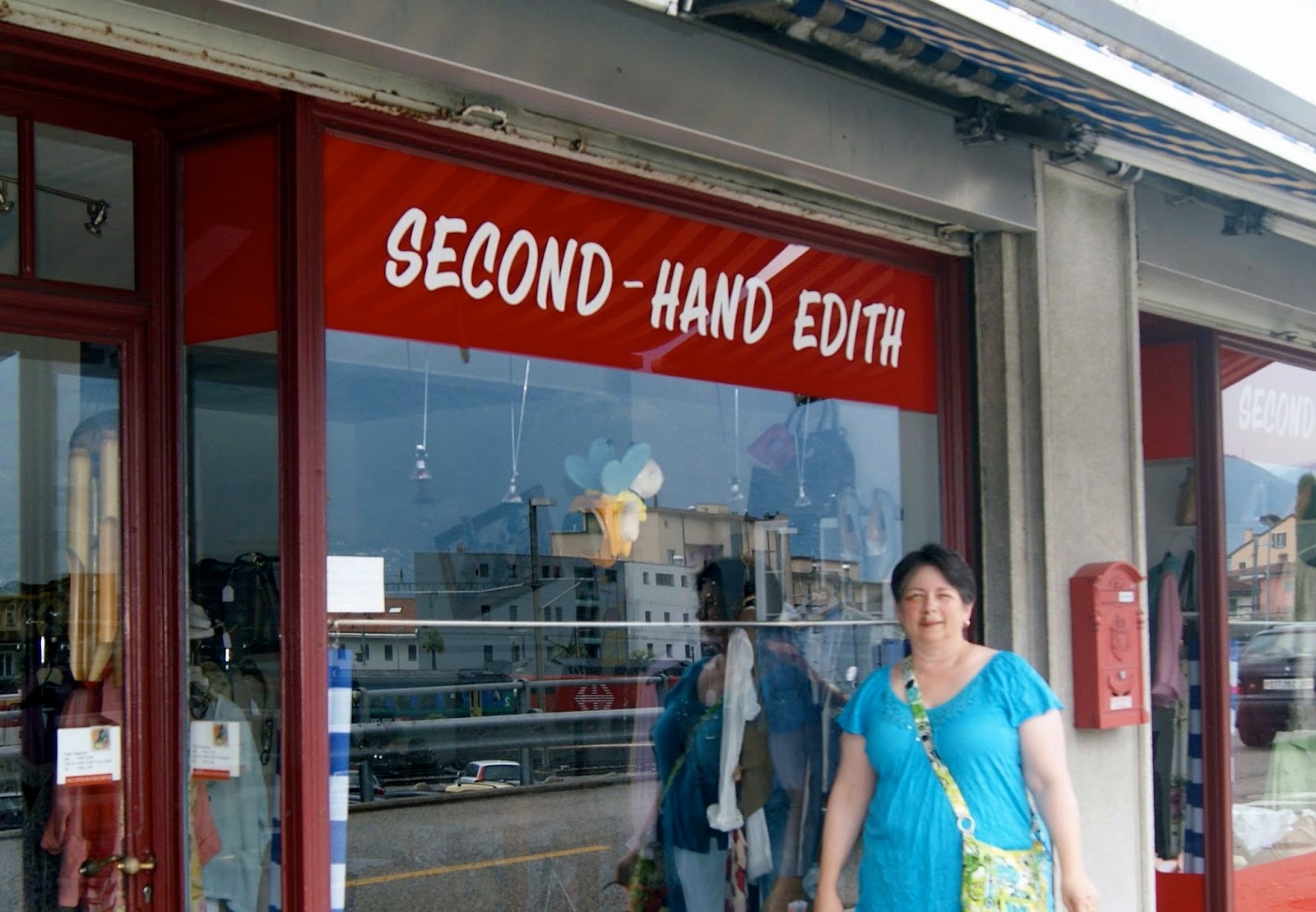
We had been looking throughout our trip for the Swiss equivalent of a thrift shop or flea market, and we were almost successful this day. Sadly, Edith's was closed.


Conveniently, half-way uphill was a small bistro with indoor (out of the weather) and outdoor (pleasant and sunny) tables where a liquid libation made the journey back and forth most pleasurable.

The afternoon lecture by Julie Guidotti covered everything you wanted to know about Tocino - the Italian part of Switzerland. This was in preparation for tours the duck would lead us on the next dayto the old part of town and a quaint village of Sogogno,  with its Museum of Valle Verzasca.

The evening meal took on a slight Italian flair, without the spaghetti and meatballs often envisioned by Americans. A tasty salat, zuppa, and pesce with root vegetables graced our tables along with a light white vino. Bon Appetite!


Heartier souls could descend the hillside once again to enjoy a walk around the lake before retiring. Tomorrow's tours would include an "E Ticket" bus ride on narrow mountain roads.

Today's trip:


View Larger Map
This short video gives you some idea of the scenery as we made our way across Italy and back into Switzerland again.


Monday, September 9, 2013

Castles and Climbers

After the usual delightful Swiss breakfast and a short talk about "The Simplon Pass" which connects northern and southern Europe, we followed the duck literally next door to Stockalper Castle. 


View of Stockalper Castle from our hotel

Constructed between 1658 and 1678 by Kaspar Stockalper, the structure was the largest example of private construction in Switzerland at the time.


Internal courtyards


At the time, castles and wayside inns provided shelter, food and a trade route to those travelers along the mountain pass (Simplon) connecting Italy and the Mediterranean with the rest of Europe. Stockalper, a silk merchant, took full advantage of his position on the Simplon pass to control and profit from any traffic across the route, and became one of the wealthiest men in the area because of it.

Later, Napoleon even constructed a military base, "Alte Kaserne," along the route not only to protect this national road, but to provide a resting place for merchants traveling this often difficult pathway. Fortunes were made and cities, like Brig, began to flourish as improvements made passage possible even during some winter months.


Stockalper Castle is a fine display of the wealth and life during those times with ornate wrought iron gates, courtyards, an ornately decorated chapel, and city administration rooms heated by tiled stoves which could be stoked from an adjoining hallway without disturbing the business of the day being conducted inside. Art, hand-painted wallpaper and solid hand-crafted wood furniture adorns the castle rooms still in use by city officials today.


Chapel Altar Highlighted with Silver

Hand Painted Wallpaper 


Peggy really liked the wallpaper!

Mid-morning, the duck once again led us to the Bahnhof for the train to Zermatt at the base of the Matterhorn. Small wonder (no pun intended) that Disney chose this breathtaking peak and surrounds as the basis for his commercial enterprise. The cog train we rode made its way higher and higher through the valley alongside flowing waters, stands of trees, dottings of houses and pastures. 


Arrival at Zermatt started a "short walk, slightly uphill" past shops and restaurants to a most beautiful "Kirche" (church) 


which also holds a graveyard for climbers who died attempting to reach the summit of the Matterhorn. Often, bodies had to wait to be buried until the Spring thaw came.


The flowers are Edelweiss


Walking through the village paths, we stopped for a lunch of local dishes at Cafe Fuchs and readied ourselves for the underground railroad trip to Sunnegga, with its view of the Matterhorn. 


The oldest structure in Zermatt

Cars are not permitted in Zermatt

Our lunch of salad and cholera


This train is not really a train at all. Think of an incline funicular like the gentle ones in Pittsburgh, PA that take you up the hillsides to view the city from its heights. Now throw that image out of your mind completely.

Funiculars use gravity to propel two cars past each other up and down a hillside. The same is true for the inclined railway taking you to Sunnegga - only more like something built at Cape Canaveral. Starting at 1620 meters in Zermatt, the duck leads you through a tunnel inside the mountainside to a waiting set of seats inside the car reached by climbing concrete stairs. Each car holds three seated and two or three standing passengers. Looking up the stairway, you see nothing but rails and lights disappearing at an absurd angle to somewhere up there at 2288 meters. It's the ride of your life and once underway, you reach the top in just 90 seconds.


That's 5259.61 feet to we Americans!

Going Up!

The view from the top of the car to the bottom

Catching our breath and wondering if we left vital organs somewhere down below, we are greeted by bright sunshine, blue skies, puffy clouds and a chalet with seats and tables with a most spectacular view. From Sunnegga, ski lifts and hiking paths lead off to higher climes. We had a perfect day to shoot photos, get sunburned if we weren't careful, and enjoy a brief aperitif and the scenery.

And now, we are going to post a ridiculous number of pictures of the Matterhorn. It's just too beautiful to choose just a few:


Can you see the tiny weather station all the way at the top?


Sometimes you just need to take a LOT of pictures. This was one of those times.


We ALL had the same need to take pictures

We took pictures of each other too!

The trip back was a letdown - only in a small literal sense as we "dove back down" to Zermatt in 90 seconds and took the train back to Brig descending through some of the most beautiful scenery in the world. It's hard for both your brain and your eyes to take it all in. 

On arrival back at Brig, we boarded a small tourist train on tires for a guided tour of Naters and Brig pointing out various historical sites and ending up, thankfully, just a few yards from our hotel. The weather up in Zermatt had been perfect, but Brig, in the southern part of Switzerland, was experiencing a record-setting heat wave, with temperatures above 90 degrees!


OK... one more picture of the Matterhorn

Our evening was capped off with another group dinner of local fare at Restaurant Schlosskeller. An evening talk on legends of the Valais area was given by our local guide, Mrs. Beatrice Wust. Tomorrow: ITALY.

The following video of Zermatt and the Matterhorn is beautiful...